Every baker feels thwarted at times, when even the bread that is baked isn’t what we hoped for, and frustration blocks our available pleasure in the work. Knowing these common problems takes them from being a mystery to be solved and instead makes them an opportunity to learn as they are mostly due to hydration, fermentation and oven rather than irretrievable mistakes. A tight crumb, for example, may be an indicator of under-fermentation and insufficient gluten development—a dough without enough time or attention to grow the strength required for gas capture and expansion.
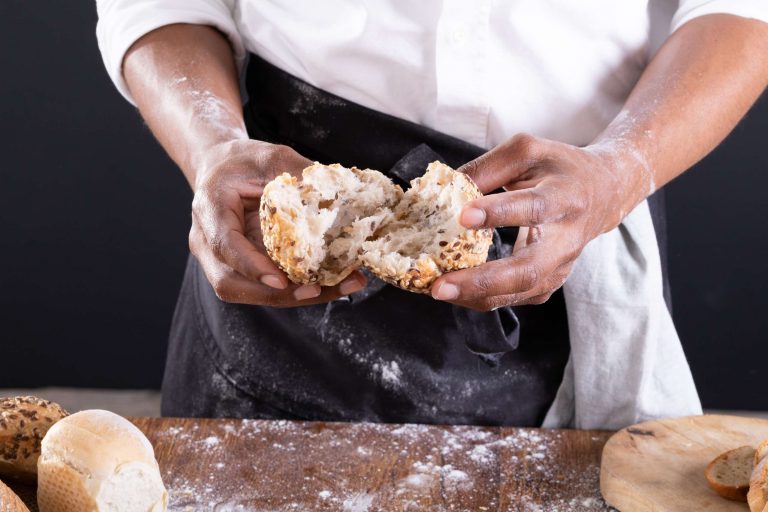
Gummy or wet centers often come from baking too soon, before the crumb is fully set into place in the oven’s heat; and from cooling in a humidity-holding pocket. Letting the loaf cook through to its deep internal temperature and then cooling it, uncovered, on a wire rack to release excess steam yields a dry, satisfying texture. Likewise, pale, flaccid crusts has a lack of color as well as flavor are the result of too little steam in the first moments of baking when gelintinsation (moisture) and Maillard reaction(cooking) give you depth that is golden.
Tunnels or open folds suggest over handling at shaping while knocking out nicely formed gas pockets or an uneven fermentation where large bubbles come together. A delicate gest/preshaping and shaping maintain the formed structure of bulk fermentation, while uniform dough temperature insures uniform activity. Flat breads with little rise come from poor dough strength to carry the dough up while baking, fixed by stronger gluten through folds or just a bit lower hydration until more muscle is built.
Bakers also learn to adjust: other environmental factors, such as the season and flour variations, similarly influence outcomes — bakers must adapt rather than strictly follow recipes. In dry climates, dough might benefit from extra water; in humid ones, exercize restraint and resist the temptation to add more flour as the stickiness eventually subsides. There is some variability in how flours take up liquid, so it’s a good habit to get into forwarding as you venture into different recipes, tracking your grams and paying attention to the behavior of your dough.
Embracing a problem with curiosity (instead of defeatism) cultivates resilience and deeper mastery. Every flawed loaf offers messages, honing intuition about timing, touch and conditions. These experiences build into an instinctual understanding that transforms possible future failures into opportunities, and you bake confidently with breads always a delight through patience, observation, and perpetual learning.